
-
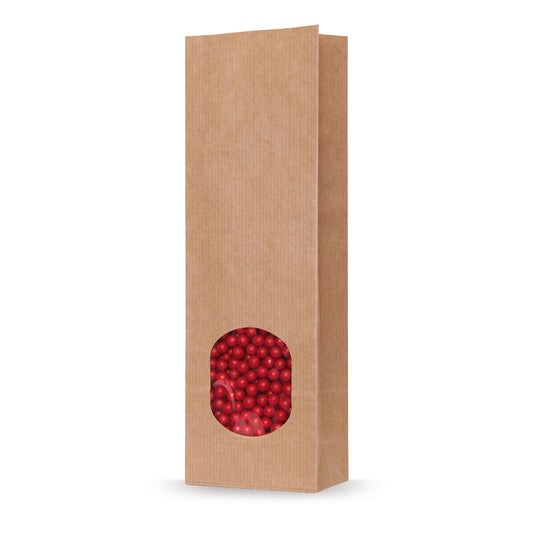
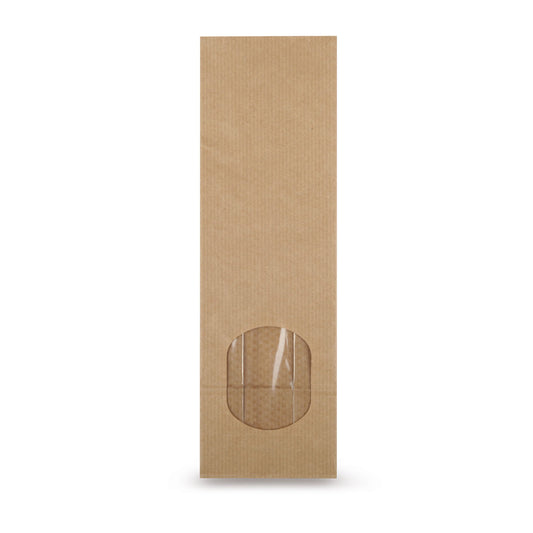 Regular price From 53,81 €Regular price
 -
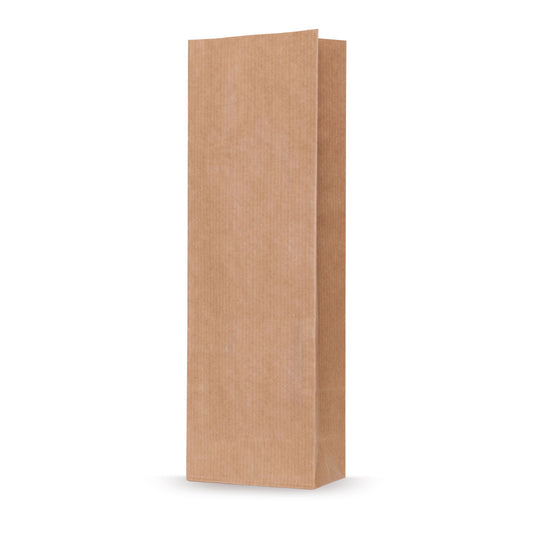
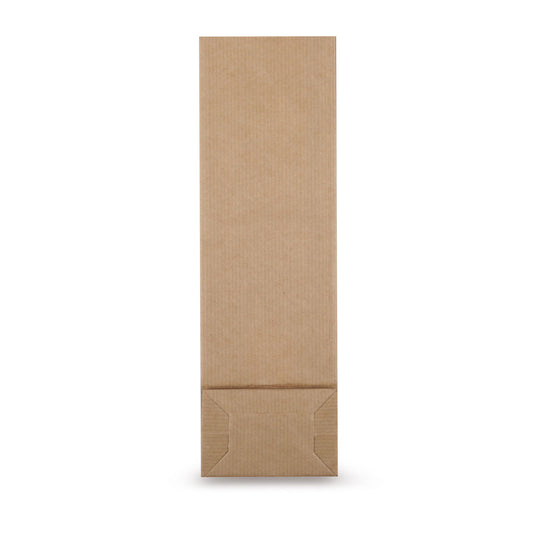 Regular price From 49,50 €Regular price
Further sustainable natural paper packaging
Further block bottom bag variants
- Block bottom bags overview
- Block bottom bags in natron kraft
- 4-ply block bottom bags
- Block bottom bags for coffee
- Block bottom bags with window
- Block bottom bags for food
Popular individual products from this range:
Shipping & terms
Shipped from our German warehouse. Kraft paper standard sizes are generally in stock; custom printing is scheduled individually within the delivery window. No minimum order value. All customers – B2B and B2C alike – receive volume pricing. FSC certificates and free samples via our enquiry form.
What are kraft paper block bottom bags?
Block bottom bags in kraft paper combine the classic block bottom construction (a rectangular, upright base) with an outer layer of natural brown kraft paper film instead of conventional plastic laminate film. This achieves two effects at once: a visibly sustainable brand presence with high tactile value, and packaging that in most cases is recyclable via the waste paper bin (provided no heavy PE inner coating has been used).
Not all kraft paper is the same: there is natural brown, bleached white, waxed and coated kraft paper in various weights. For packaging applications, natron kraft papers of 60–80 g/m² are mostly used, offering high strength at a moderate wall thickness. For food contact, a thin PE inner coating (or a glassine paper inner side) is required, as pure kraft paper is not moisture-resistant and can absorb fats.
Our kraft paper block bottom bags range covers standard sizes from 50 g (sample) up to 1 kg (family pack). With or without a window (here too often with a mono-PE window for recyclability), with or without an aroma protection valve (for coffee), with or without a zip closure. Food-grade compliance to EU 10/2011 is standard for coated inner sides. For brands that place explicit value on sustainable packaging, there are also compostable inner coatings made from PLA.
What are kraft paper block bottom bags suitable for?
- Organic foods: muesli, dried fruit, nuts – packaging that matches the organic ethos
- Artisan baked goods: bread, pastries, biscuits with a natural brown premium look
- Specialty coffee: artisan roasters with a natural paper look and aroma protection valve
- Tea producers: premium tea packaging with a tactile natural feel
- Natural cosmetics & care: bath salts, solid soaps, powders in natural-look bags
- Pet food (premium): high-quality dog and cat food with an organic ethos
Which kraft paper variant is the right one?
- Natural brown, unprinted: a classic organic look, cost-effective, very close to nature
- Natural brown, printed: brand branding without losing the natural look
- Bleached (white): a premium look, somewhat more “refined” than natural brown
- With PE inner coating: moisture protection for moist or greasy contents
- With glassine paper inner side: all paper, no plastic
- With mono-PE window: recyclable with waste paper (combined mono-material)
- With aroma protection valve: specially for coffee with a natural paper look
- With zip closure: resealability, also in the natural paper variant
Your advantages with kraft paper block bottom bags from Elke Plastic
Since 1976 we have imported packaging bags directly from the manufacturer and carry the full kraft paper range in food-grade quality. For organic brands and artisan producers this means: certified paper quality from FSC forestry, with a PE inner coating or glassine inner side, in all common standard sizes from the warehouse. On request we supply FSC certificates, declarations of compliance and migration test reports.
Kraft paper packaging has particular requirements: it must have the strength of genuine industrial paper (not “decorative paper”), the inner coating must suit the contents (PE for moist, glassine for greasy, PLA for compostable), and the printing must blend harmoniously into the natural look. Our packaging specialists advise you on every aspect – from the right paper weight to an authentic print look.
Shipping is from our German warehouse with short delivery routes. Standard sizes are generally in stock; custom printing is scheduled individually within the delivery window. All customers – B2B and B2C alike – receive volume pricing for larger runs. Free samples are a matter of course – so you can check the paper feel, print quality and coating performance in advance.
Frequently asked questions about kraft paper block bottom bags
Are kraft paper block bottom bags really more sustainable than film?
As a rule, yes – provided the paper comes from FSC-certified forestry and the inner coating is kept to a minimum (or is absent altogether). Pure kraft paper is recyclable in the waste paper stream, and usually still is with a thin PE inner layer. Fully plastic-free variants (with a glassine inner side) are the best ecologically.
Do I need an inner coating?
Pure kraft paper is not moisture- or grease-resistant. For moist contents (fresh bread, baked goods with a fat content), oily foods (nuts, oiled spices) or powders prone to clumping, you need an inner coating. PE is standard, glassine is the more sustainable alternative.
Are the bags moisture-resistant?
Only with an inner coating (PE or glassine). Pure kraft paper softens quickly on contact with moisture and loses its strength. For cold-storage or frozen applications, a coating is essential.
What about aroma protection?
Kraft paper bags have a considerably lower aroma barrier than aluminum laminates. They are well suited to foods with moderate aroma requirements (muesli, dried fruit). For extremely aroma-sensitive products (coffee, tea, vanilla) we recommend laminated films with aluminum or EVOH.
Are the bags food-grade?
Yes, provided a food-grade coating is used. Pure kraft paper must be unsized and unbleached to be food-grade. PE inner coatings are food-grade to EU 10/2011. We supply declarations of compliance on request.
Are they compostable?
Pure kraft paper can be composted. With a PE inner coating it is NOT (PE is not compostable). For industrially compostable variants there are PLA-coated inner sides – these are certified to DIN EN 13432.
How do kraft paper and natron kraft differ?
Natron kraft is a specific kraft paper grade (chemically treated for higher strength and a finer fibre structure). Standard kraft paper is more robust and a more natural brown, while the natron variant is finer and easier to print. For premium brands, natron kraft is often the better choice.
Which printing suits a kraft paper look?
Natural print colours (earth tones, white, black) look very authentic on brown kraft paper. Highly colourful designs can undermine the natural feel. For organic brands we recommend minimalist, typographic designs.
Can the bags be disposed of with waste paper?
Pure kraft paper bags, yes. With a PE inner coating, only partly – ideally the end customer would peel out the PE inner film, which in practice rarely happens. For full waste-paper suitability we recommend pure paper or a glassine inner side.
Are smaller runs possible?
Stock items in standard sizes are available from the warehouse. Custom printing becomes worthwhile from larger runs. Artisan producers often start with standard bags plus self-adhesive labels and switch to their own print later.
How much does kraft paper packaging cost compared with film?
Kraft paper bags are often 20–40% more expensive than standard laminate film. For premium organic brands this usually pays off through greater end-customer acceptance and a better brand image. For mass-market items, classic film is usually the more cost-effective choice.