
-
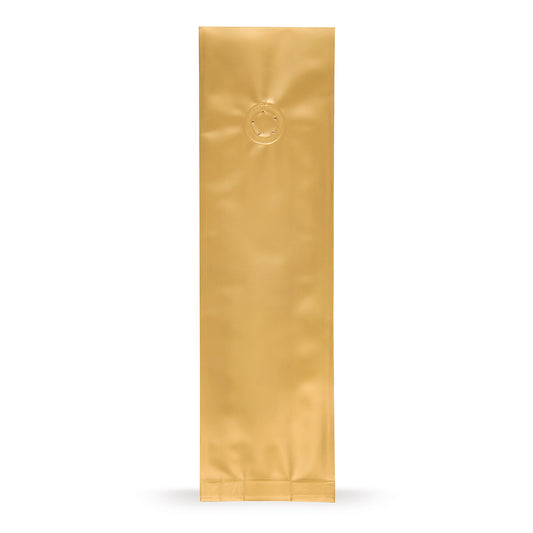
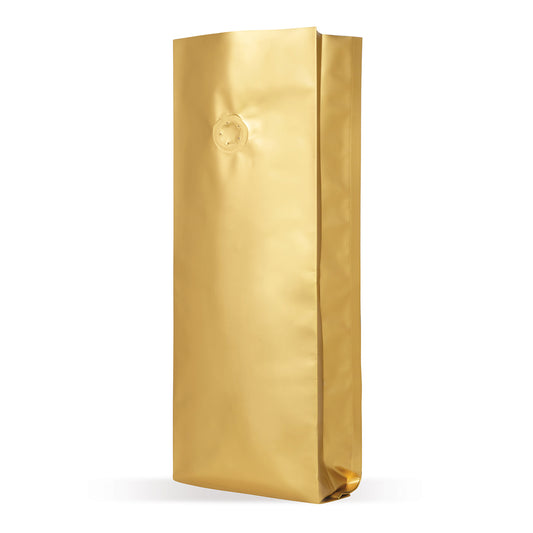 Regular price From 235,04 €Regular price
 -
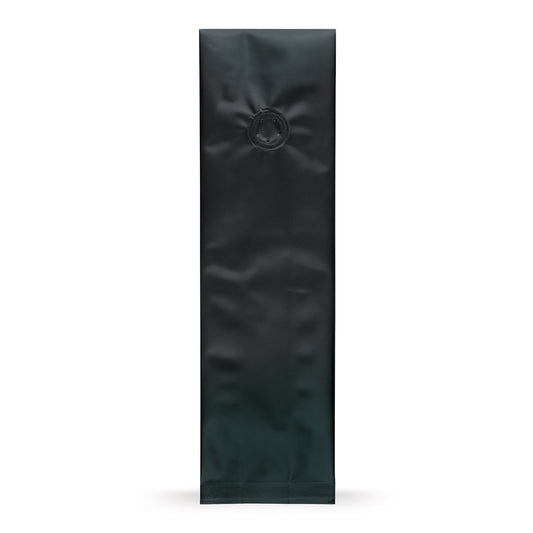 Regular price From 228,18 €Regular price
 -
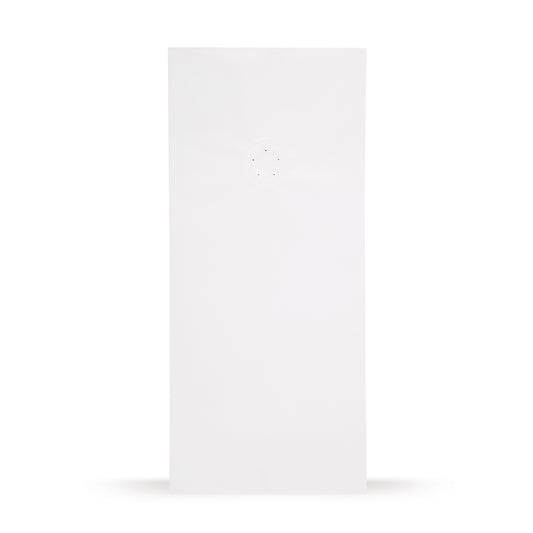 Regular price From 233,20 €Regular price
 -
 Regular price From 205,69 €Regular price
 -
 Regular price From 233,20 €Regular price
 -
 Regular price From 233,20 €Regular price
 -
 Regular price From 233,20 €Regular price
 -
 Regular price From 139,02 €Regular price
 -
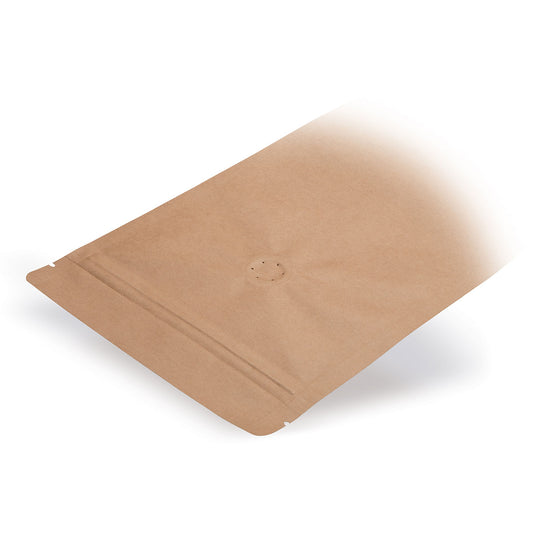 Regular price From 156,20 €Regular price
 -
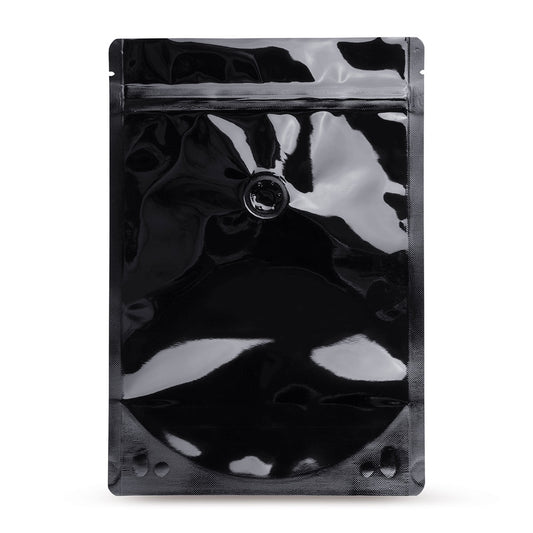
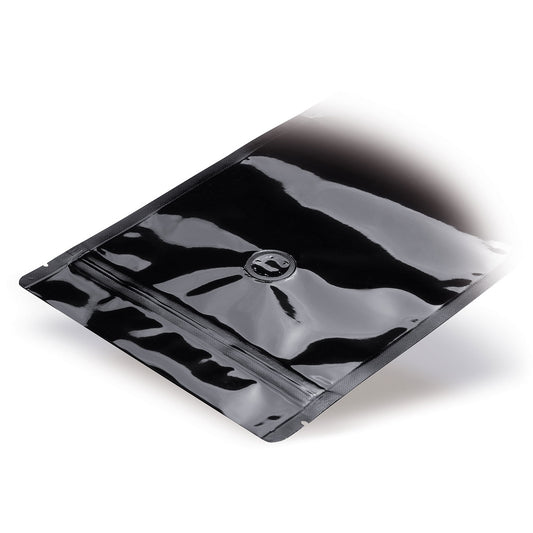 Regular price From 190,96 €Regular price
Packaging bags overview & related bag types
- All packaging bags at a glance
- All coffee packaging – by application
- Stand-up pouches for tea – a similar concept
- Block bottom bags – box-shaped for premium presentation
- Sustainable packaging solutions
- Printed coffee bags with logo
- Request free samples
Popular coffee bag versions
- Coffee bags with aroma protection valve
- Coffee bags for beans & ground coffee
- Coffee stand-up pouches
- Coffee block bottom bags
- Aluminum stand-up pouches
Popular individual products from this range:
Shipping & delivery
We ship promptly and reliably from our German warehouse. For large orders, direct delivery by freight forwarder. For printed custom sizes, the delivery time is arranged individually. Free shipping on orders over €200 net within Germany.
What are coffee bags?
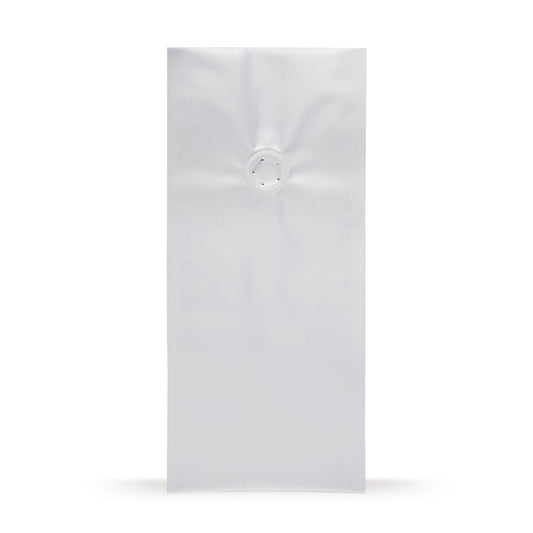
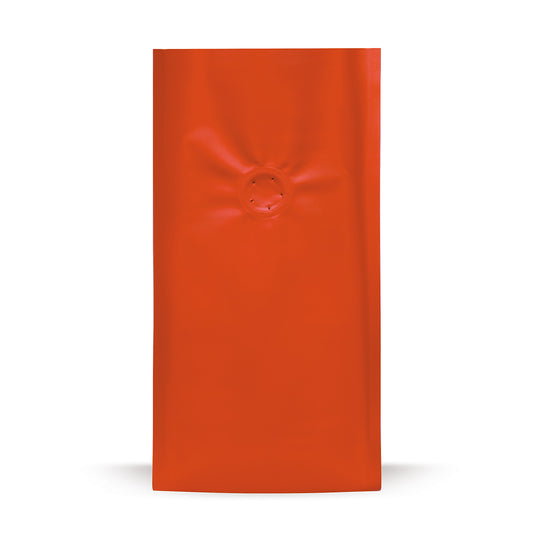
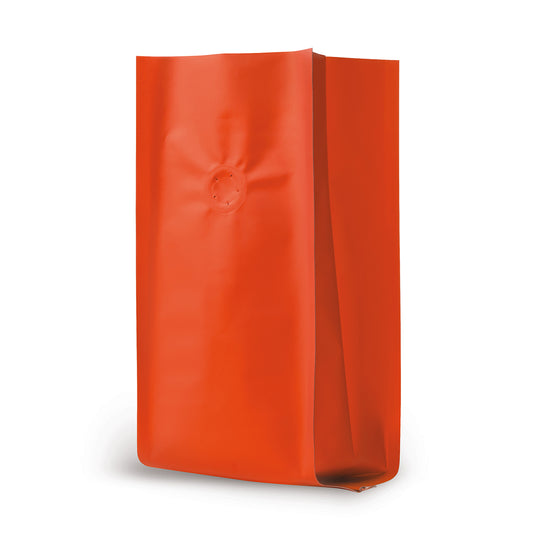
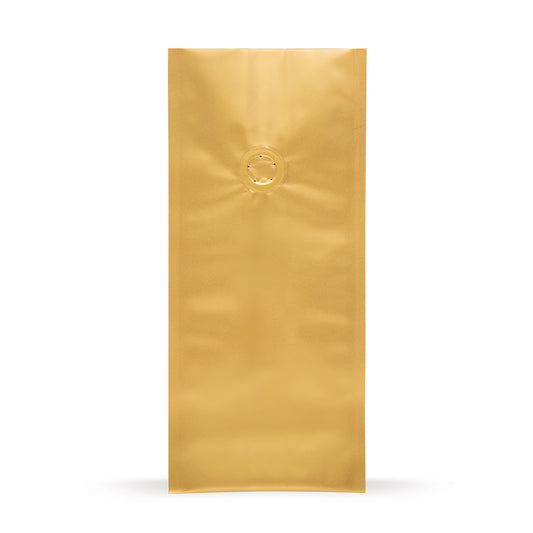
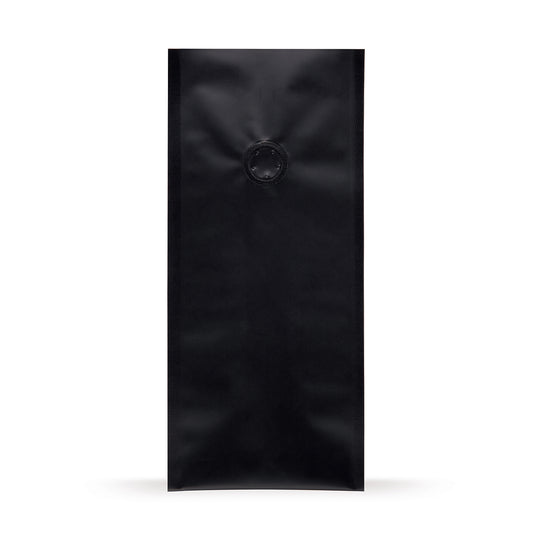
Coffee bags are specially designed packaging for roasted coffee – both whole beans and ground. They differ from normal packaging bags in their aroma protection valve: a small one-way valve that lets CO₂ from the fresh roast escape but no oxygen back in.
In addition, high-quality coffee bags often have an aluminum inner layer against light and moisture. The standard shape is the classic block bottom or stand-up bag; high-quality versions have a heat-seal closure or an optional zip.
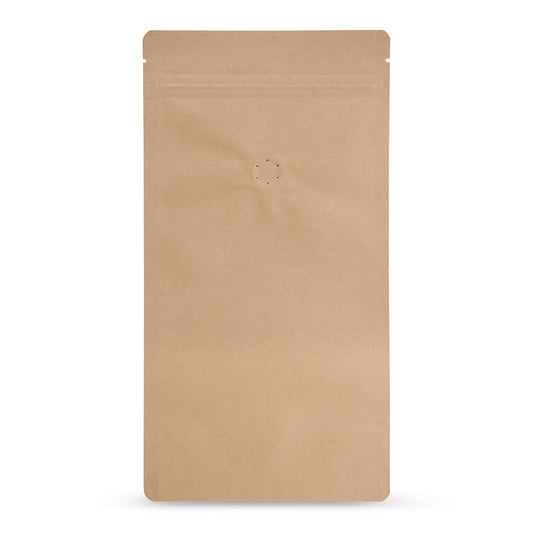
For particularly fresh coffees (specialty coffee), aroma-tight aluminum composite bags are the right choice. For classic roasts, standard coffee bags with a valve are sufficient. For sustainable brands, there are kraft paper versions with a food-grade inner coating.
What are coffee bags suitable for?
- Coffee roasteries: beans and ground coffee with aroma protection
- Coffee shops: in-house blends for take-away sales
- Specialty coffee: single-origin, micro-lot roasts, limited editions
- Home roasters: storing and gifting small quantities of self-roasted beans
- Online shipping: coffee subscriptions, monthly deliveries, tasting packs
- Hospitality: portioned coffee packaging for room service
- Coffee lovers: personal consumption, gift packs, cafe souvenirs
- Speciality retailers: organic and fair-trade coffee varieties
Which coffee bag versions do we offer?
- Coffee bags with aroma protection valve – the classic roastery packaging
- Coffee bags for ground coffee & beans – universally usable
- Coffee stand-up pouches – free-standing doypacks with a valve
- Coffee block bottom bags – box-shaped, premium look
- Coffee side gusset bags – with expandable volume
- Aluminum stand-up pouches – maximum light protection
Advantages of our coffee bags
- Aroma protection valve: significantly extends the freshness of the coffee.
- Aluminum inner layer for maximum light and moisture protection.
- Certified food-grade in accordance with EU 10/2011.
- Kraft paper options for organic and speciality brands.
- Printable: roastery logo, roast date, variety description, back-of-pack text.
- Various formats: block bottom, stand-up and side gusset bags with a valve.
- Private & commercial: standard quantities for home roasters, volume tiers for roasteries.
- Fast shipping from our German warehouse.
Material properties of coffee bags in detail
Coffee bags require a high aroma and oxygen barrier, as coffee oils and aromatic compounds oxidise quickly. The material composite determines shelf life, aroma retention and best-before date.
PET12 / AL7 / LDPE110 — aluminum high barrier
A three-layer composite of PET (print side), a 7 micron aluminum barrier layer and an LDPE sealing layer. OTR < 0.1 cm³/m²·24h, WVTR < 0.1 g/m²·24h, complete light and aroma barrier. The standard for premium coffee and specialty coffee with a best-before date of up to 12 months.
Kraft paper / AL7 / LDPE — paper-aluminum hybrid
Kraft paper outer (natural or white), aluminum barrier layer and PE inner. A handcrafted look with barrier values technically identical to a pure PET/AL composite. Popular with specialty coffee producers and premium coffee.
PE / EVOH / PE — mono-PE recyclable
A monomaterial composite with a thin EVOH barrier layer (< 5%). OTR approx. 1–3 cm³/m²·24h — sufficient for coffee with a best-before date of up to 6–8 months. NIR-detectable in the PE stream, PPWR-compliant from 2030.
Aroma protection valve — a mandatory component for fresh roasted coffee
Coffee beans release CO₂ and aromatic compounds after roasting. An aroma valve lets CO₂ escape while preventing oxygen ingress. Standard versions are one-way valves with a silicone or membrane mechanism.
Window and appearance
On request, with a window for bean presentation. Transparent film is incorporated into the material composite, and the barrier is retained in the non-transparent areas.
All materials are certified for food contact in accordance with EU 10/2011. Declaration of conformity (PIM) with every order on request.
Custom adaptation — printing, special sizes and valves
Coffee bags are classic brand carriers and are in most cases produced with custom printing.
Printing processes
Printing in rotogravure with up to 10 colours, including Pantone spot colours, metallic effects and spot varnish. High-resolution photo reproduction of beans, origin plantations and roaster portraits is possible.
Special sizes and aroma valves
Format adjustments in width (60–250 mm), height (100–400 mm), bottom gusset depth (30–100 mm) for 100 g / 250 g / 500 g / 1,000 g fill contents. The aroma valve position is at the top of the front, with branding around the valve on request.
We will clarify the minimum order quantity and delivery time individually following your enquiry. Request a quote.
Sustainability — coffee bags and the EU Packaging Regulation
The EU Packaging Regulation (PPWR) affects coffee bags particularly strongly, as the aluminum high barrier is technically central for premium coffee. Our range is geared to the gradual PPWR migration path.
Mono-PE for standard coffee
For coffee with a best-before date of up to 6–8 months, mono-PE (PE/EVOH/PE) is a fully fledged alternative to the aluminum version. NIR-detectable in the PE stream, RecyClass-compliant. A changeover already under way at larger roasteries shows that the solution is production-ready.
Aluminum composites after 2030
For aroma-sensitive specialty coffee with a best-before date > 12 months, aluminum composites remain without a technically equivalent replacement. The PPWR provides for technical exemptions here, albeit with extended recycling obligations for those placing products on the market.
Compostable versions
Kraft paper/PLA coffee bags are industrially compostable in accordance with EN 13432. Suitable for direct marketers with quick coffee turnover (farm shops, cafe sales). Not suitable for mail order requiring a long best-before date.
Aroma valves and recycling
Aroma valves are made of PP with a silicone membrane. Pre-consumer disassembly before recycling is possible; in sorting plants, automatic separation takes place via density selection. Mono-PE bags with a valve remain recyclable.
Frequently asked questions about coffee bags
Why do I need an aroma valve for coffee?
Freshly roasted coffee releases CO₂ for several days. Without a degassing valve, internal pressure builds up – the bag bulges or bursts. The valve lets CO₂ escape but blocks oxygen. → with aroma valve.
Which coffee bag for beans vs. ground coffee?
Aluminum composite bags with a valve are suitable for both. Ground coffee oxidises faster – an aluminum barrier and valve are particularly important. → for beans & ground coffee.
Which format is standard for coffee?
Flat coffee bags with a valve = economical. Coffee stand-up pouches = free-standing, POS-ready. Coffee block bottom bags = premium box shape.
How much coffee fits in a 250 g bag?
A bag of approx. 130×220 mm for 250 g of beans. For 500 g, 160×270 mm. For 1 kg, 200×330 mm. Variable depending on roast level and grind.
Are coffee bags food-grade?
Yes – certified in accordance with EU 10/2011, with a declaration of conformity on request. The standard for food contact.
How do I seal coffee bags myself?
With a heat sealer. Aluminum composite needs a slightly longer sealing time than pure LDPE film. Test 2–3 trial seal seams before production.
With a zip closure for repeated opening?
Yes – available as stand-up pouches with zip, ideal for home storage once opened.
With a window for bean presentation?
Yes – stand-up pouches with a window are popular for premium brands: the contents are visible, but the aluminum barrier is only behind them. For maximum aroma protection, it is better to go entirely without a window.
How long does coffee keep in aroma packaging?
In unopened aluminum composite packaging, typically a best-before date of 12–18 months. After opening, max. 4–6 weeks for the best aroma retention.
Printable with logo and tasting notes?
Yes – flexography or rotogravure, with full back-of-pack labelling under LMIV. A roast-date stamp field for freshness indication. → Custom production.
What about sustainable coffee bags?
Aluminum composite is difficult to recycle (not a single-type material). Alternatives: kraft paper with an aroma barrier or monomaterial bags with a high-quality barrier layer. → Sustainable packaging.
Suitable for home roasters (hobby roasting)?
Yes – we also supply small quantities with no minimum order. Ideal for home roasters and producers starting out.
With a kraft paper look for organic brands?
Yes – kraft paper stand-up pouches or kraft paper block bottom bags combine a natural look with an aroma barrier layer.